
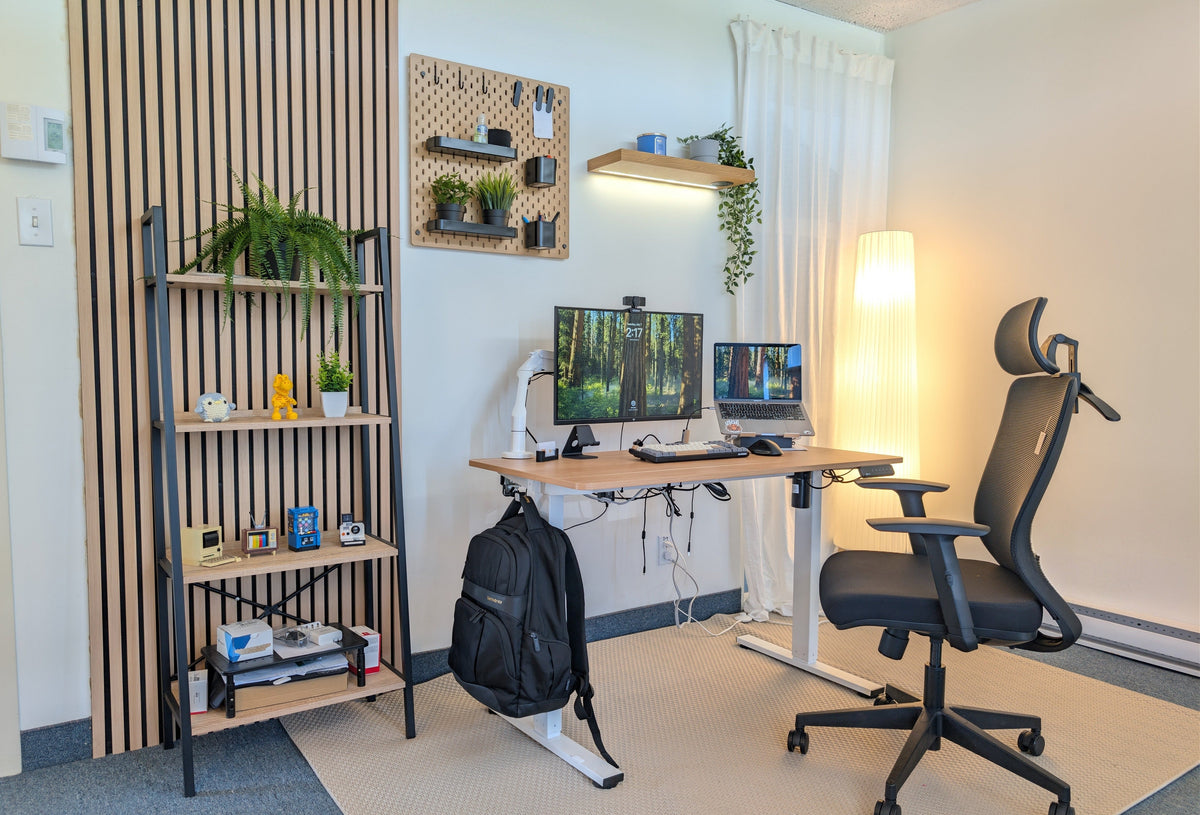
How high a floating shelf should be depends on where it is installed and what you plan to place on it. As a starting point, display shelves often work well around eye level, shelves above desks or counters usually need 18 to 24 inches of clearance, and stacked shelves often look balanced with 10 to 16 inches between them. The best height combines comfortable access, safe clearance, and proportions that suit the wall and furniture below.
What is the standard height for a floating shelf?
There is no single standard height that works in every room. A floating shelf used for decor has different requirements from one used above a desk, kitchen counter, sofa, or bed.
For a wall with no furniture below it, placing the centre of the shelf arrangement roughly 57 to 60 inches from the floor is a useful visual starting point. This keeps the display near eye level and can help the shelf feel connected to the room.
Function should still come first. If you need to reach the shelf every day, keep it comfortably accessible. If it is mainly decorative, it can sit higher.
Before drilling, use painter's tape to mark the proposed shelf position on the wall. Step back and check how it aligns with doors, windows, artwork, and nearby furniture.

How high should a floating shelf be above furniture?
The right height depends on the furniture underneath and how the area is used.
Above a desk, about 18 to 24 inches above the desktop is practical for many setups. This usually leaves space for a monitor, lamp, and normal head movement. If you use a large monitor or monitor arm, measure the highest point first.
Above a sofa, around 12 to 18 inches above the top of the sofa can work well. Deeper shelves may need more clearance, and heavier objects should only be placed there when the shelf is securely mounted.
Above a bed, prioritize safety. Position the shelf high enough that nobody can hit it while sitting up, and avoid placing heavy or fragile items directly over the sleeping area.
For console tables, entryway benches, and cabinets, a gap of roughly 8 to 16 inches often creates a connected look without making the area feel crowded.
How much space should be between floating shelves?
For multiple floating shelves, 10 to 16 inches of vertical spacing is a useful starting range. The correct gap depends on the height of the items you want to display.
Small decor, framed photos, and short books can work with tighter spacing. Taller plants, vases, baskets, and large books need more room. Consistent spacing usually creates a cleaner look.
Measure your tallest planned item before installation and add a few extra inches so objects are easy to remove. Shelf depth matters too. Deep shelves can feel visually heavier, so slightly more space between them can improve balance.

How high should floating shelves be in a kitchen, office, or living room?
In a kitchen, floating shelves above a countertop often work well with roughly 18 to 24 inches of clearance. This keeps dishes, mugs, and containers reachable while leaving usable counter space below. Check the height of small appliances before installation.
In a home office, start around 18 to 24 inches above the desk, then adjust for monitor height and what you plan to store. If the desk is height adjustable, make sure the shelf remains safely above the monitor when the desk is raised.
In a living room, visual balance matters more than one exact measurement. If the shelf is above a TV, leave enough space so the wall does not feel crowded and avoid interfering with ventilation or cables. On an open wall, align the shelf with nearby furniture or architectural features.
For small apartments, wall shelves are especially useful because they add storage without using floor space. Higher shelves can hold less frequently used items, while lower shelves can keep daily essentials accessible.
How do you choose the right floating shelf height before installing?
Start with what the shelf needs to do. Decide whether it is for storage, display, everyday access, or a combination.
Measure the wall and nearby furniture. Consider the shelf's width, depth, thickness, and weight capacity. A long or deep shelf has more visual presence and may need more open space around it.
Next, identify the mounting points. Install floating shelves according to the manufacturer's instructions using suitable studs, anchors, or hardware for your wall type and intended load.
Finally, test the layout before drilling. Painter's tape or paper templates can show the exact dimensions on the wall. Check the layout while standing, sitting, and using the furniture below.
A well-placed floating shelf should improve both storage and appearance. At Zynix, we focus on modern furniture and home organization products designed to make everyday spaces more functional and efficient.
Frequently Asked Questions
How high should a floating shelf be from the floor?
For a decorative shelf on an open wall, placing the centre of the display around 57 to 60 inches from the floor is a useful starting point. Adjust it for ceiling height, furniture, and accessibility.
How high should a floating shelf be above a desk?
About 18 to 24 inches above the desktop works for many home offices. Measure your monitor, lamp, and accessories first, especially if you use a monitor arm or standing desk.
How much space should I leave between two floating shelves?
A gap of about 10 to 16 inches works well for many displays. Use more space for tall books, plants, baskets, or decorative objects.
How high should floating shelves be above a kitchen counter?
A useful starting point is roughly 18 to 24 inches above the countertop. Adjust for appliance clearance and how easily you want to reach the shelf.
How high should a floating shelf be above a sofa?
Around 12 to 18 inches above the top of the sofa can create good separation. Deeper shelves or heavier objects require extra attention to head clearance and secure mounting.
Can floating shelves be installed too high?
Yes. Shelves that are too high can be difficult to use and may look disconnected from nearby furniture. Regularly used items should remain easy to reach.
Should all floating shelves be the same height?
Not necessarily. Matching heights create a clean, symmetrical look, while staggered shelves can work well in modern layouts. The arrangement should still feel balanced and practical.